
Run decisions
Co-op
Coordinate roles, elemental windows, and shared progression without duplicating weak setups.
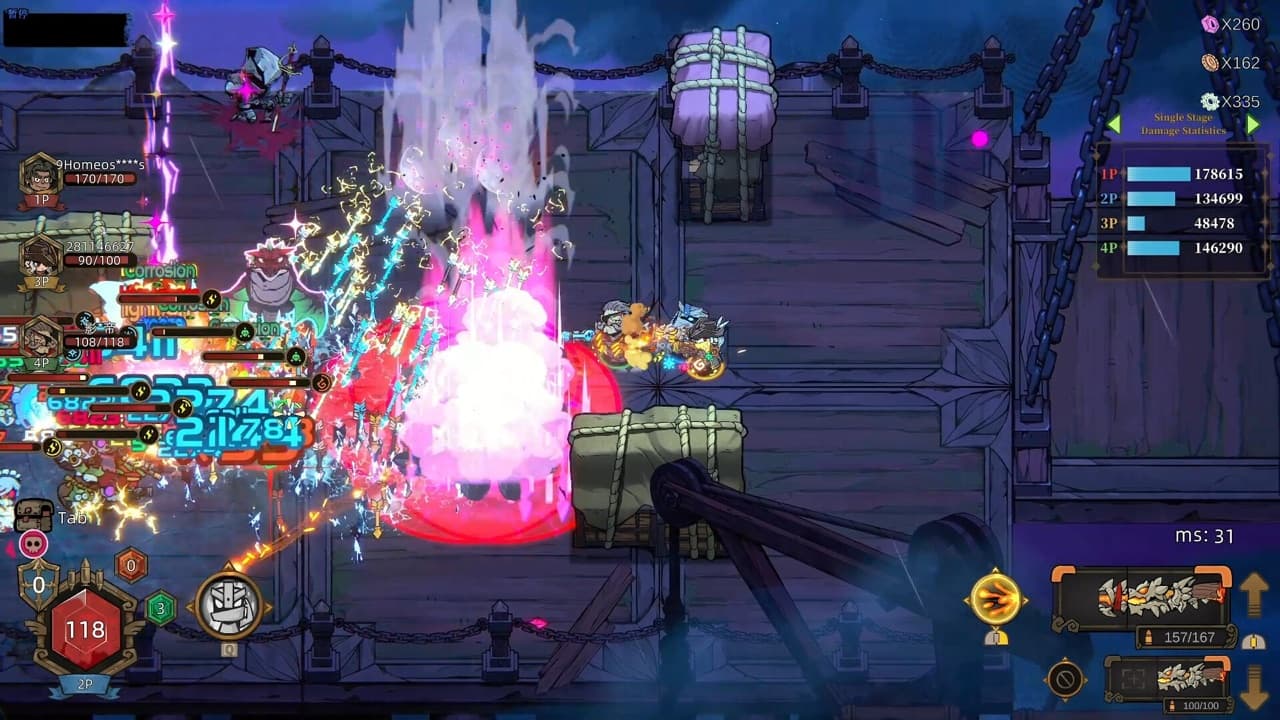
Name the jobs
Decide who provides immediate damage, setup, control, sustain, and economy. Hunters can overlap, but the group should know who is responsible when a dangerous enemy or weak room appears.
Share trigger information
Call out Transmutation states, Tarot outcomes, and items that require a specific teammate's loop. A perfect item in the wrong inventory is often less valuable than a modest item that completes an active build.
Avoid fragmented buildup
Focus compatible elements on the same target when the team wants a state to trigger. Spreading unrelated buildup across many enemies delays every payoff and makes conditional effects look weaker than they are.
Protect the next room
Use Team Talents and defensive choices to cover the group's real failure mode. More damage is not a recovery plan when revives, control, or reliable room entry are what the run lacks.
Fix the lobby in a fixed order
Update every client, confirm Steam is online, align Steam download regions, and disable or align VPN regions. Recreate the lobby after a change; if direct connection fails, use the current server-backed Lobby Code and add teammates one at a time.
Keep pressure during Silence
Current Blood Moon Silence blocks Skills and Ultimates but still allows shooting and reloading. A weapon-led teammate can maintain basic pressure while another player creates a revive window, so assign a stable revive anchor instead of sending everyone into the same danger.
Reset after a failed room
Before entering again, name the first player who went down and why. If setup arrived too late, let the immediate-damage player enter first; if the team scattered, choose one priority target and one regroup point; if revives collapsed, reserve control and movement for the recovery window instead of spending every tool on the opener.