
Run decisions
Build planning
Turn random drops into a route with a core, flex slots, and a clear exit.
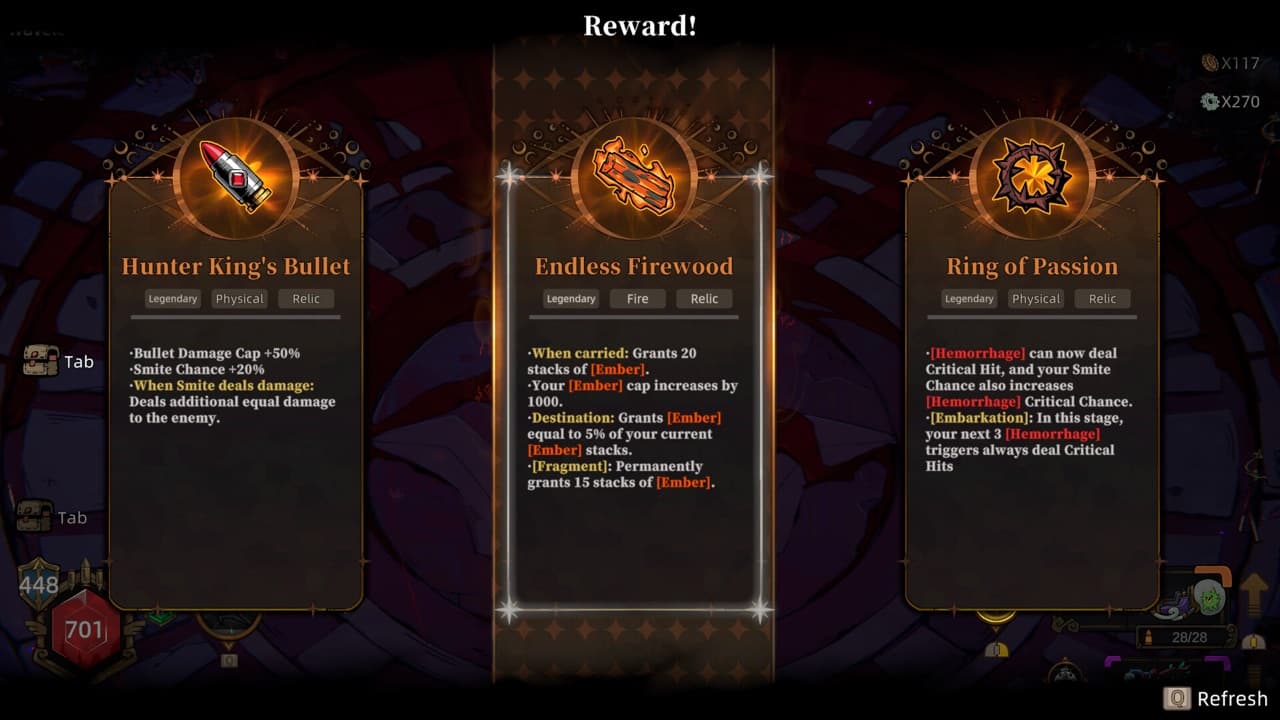
Lock the core
Start with one hunter interaction and one repeatable weapon trigger. Those two facts define the build; everything else either strengthens that loop, protects it, or covers a matchup.
Classify every effect
Separate always-on values from conditional effects before comparing. Do not add trigger chains, enemy-state bonuses, or short windows to the permanent panel.
Reserve flex slots
Do not fill every Relic or Tarot slot with a narrow requirement. Keep room for health, reload, or resistance answers and use the current Difficulty and co-op composition to decide how much safety the route needs.
Define the exit condition
Know what missing drop makes the route fail. When that point arrives, stop paying for the old plan and redirect future choices toward the strongest complete loop already present in the inventory.
Respect the legal loadout
A plan has one hunter, two weapon slots, one compatible part per weapon, up to ten Relics, up to five Tarot cards, and one choice from each of the five personal-upgrade rows. Team Talents use a separate tree and prerequisites.
Share a three-part result
Share the always-on panel separately from effects that require a proc or enemy state. Do not present best-case burst as permanent output.
Respect current trigger ceilings
The Devil and Reversed Devil can each trigger at most 100 times per stage, Reversed Fool at most 10 times per stage, and every Ultimate has a 1-second cast cooldown. Treat older infinite-loop clips as route ideas rather than repeatable throughput. If queued items and effects make a room stop responding cleanly, remove trigger multipliers instead of adding more.
Check the route at three moments
Early, secure one repeatable damage source. Mid-run, decide whether the required weapon, element, or hunter interaction is actually present. Before the final stages, spend remaining flex slots on the failure you can already see: reload exposure, weak boss pressure, poor control, or insufficient recovery.